WorkFlex: Making compliance decisions easier with AI

An AI-assisted approval experience that explains risks, answers questions, and helps HR teams make informed decisions. AI does the explaining and preparing; HR makes the final decision.

Delivery: Quick fixes → Foundation → AI-powered solution.
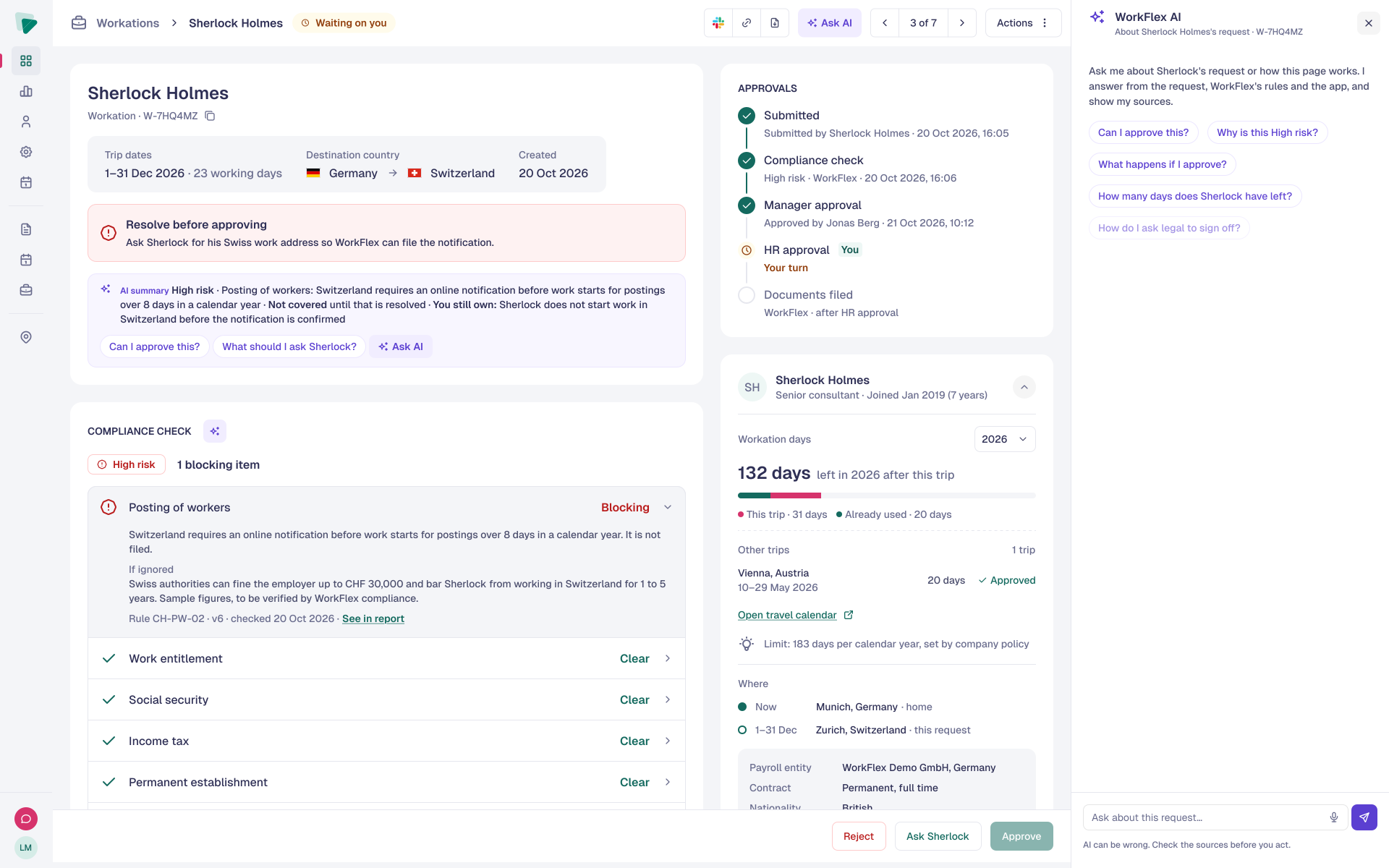
The redesigned request page for Sherlock Holmes, waiting on the HR approver, with a blocking compliance item and WorkFlex AI's summary

Brief

Redesign the HR approval experience within 3–4 days.

WorkFlex assesses cross-border work, files the paperwork and covers qualified trips. This screen sits where HR is meant to review with a single click.
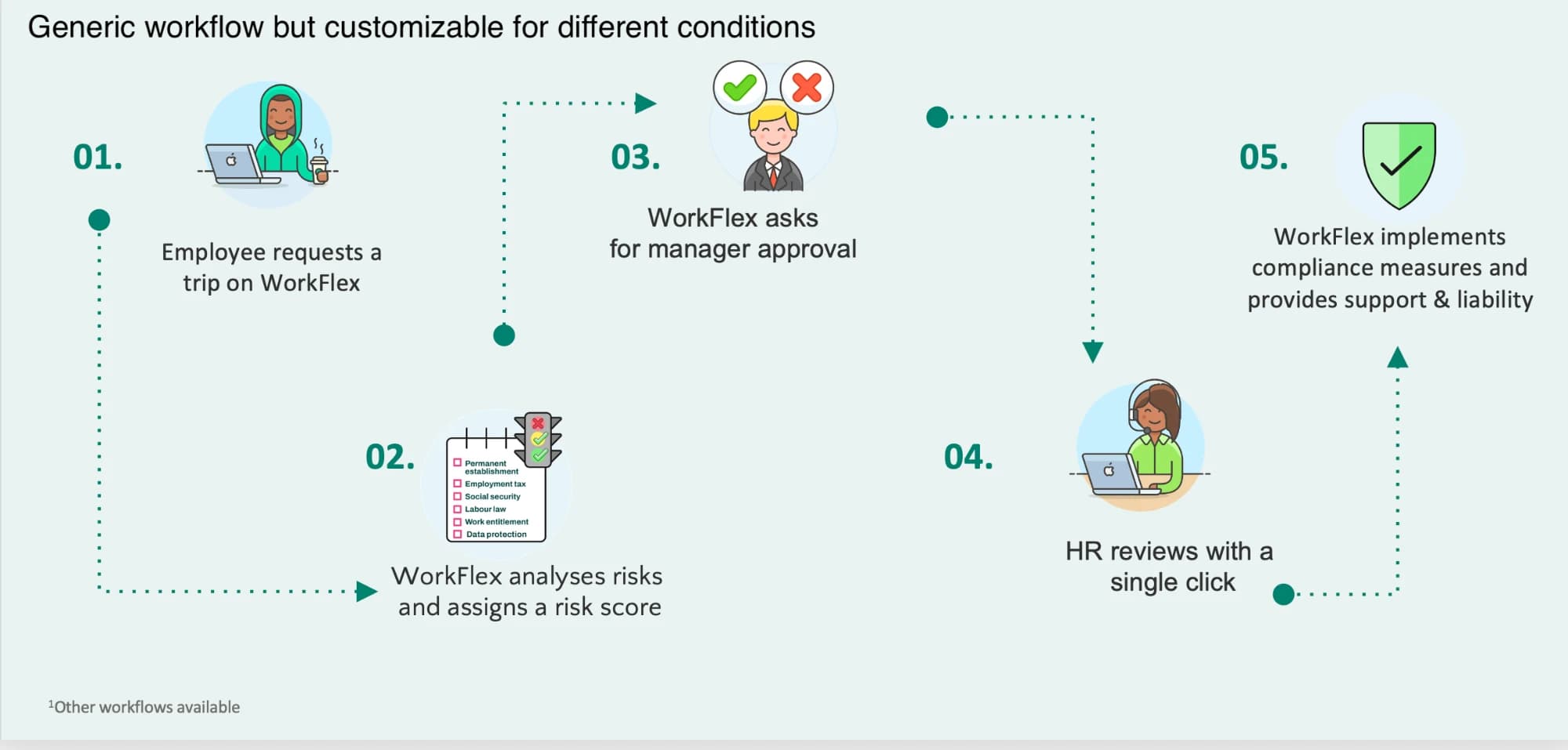
WorkFlex five-step workflow: request, risk score, manager approval, HR review, implementation
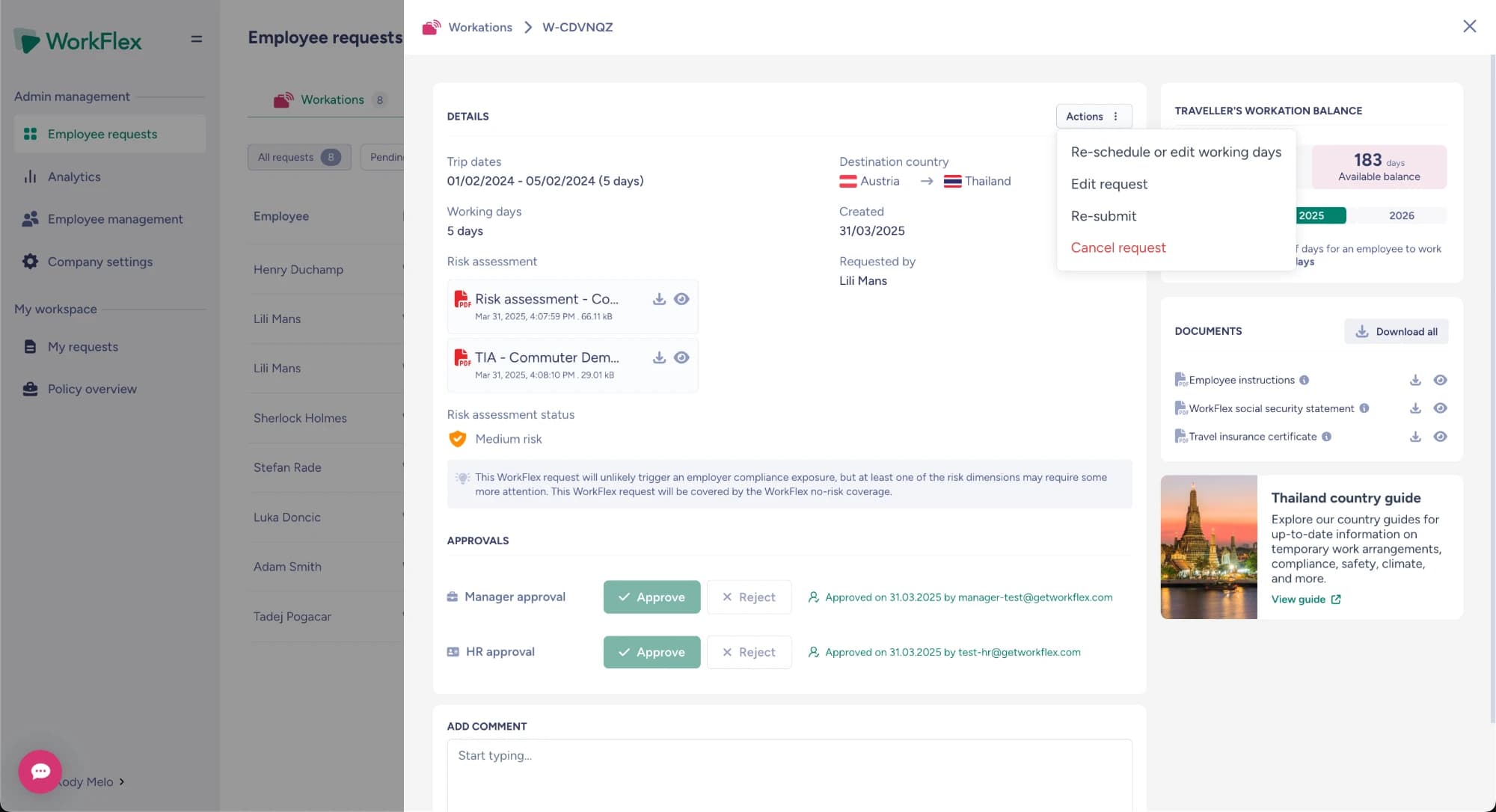
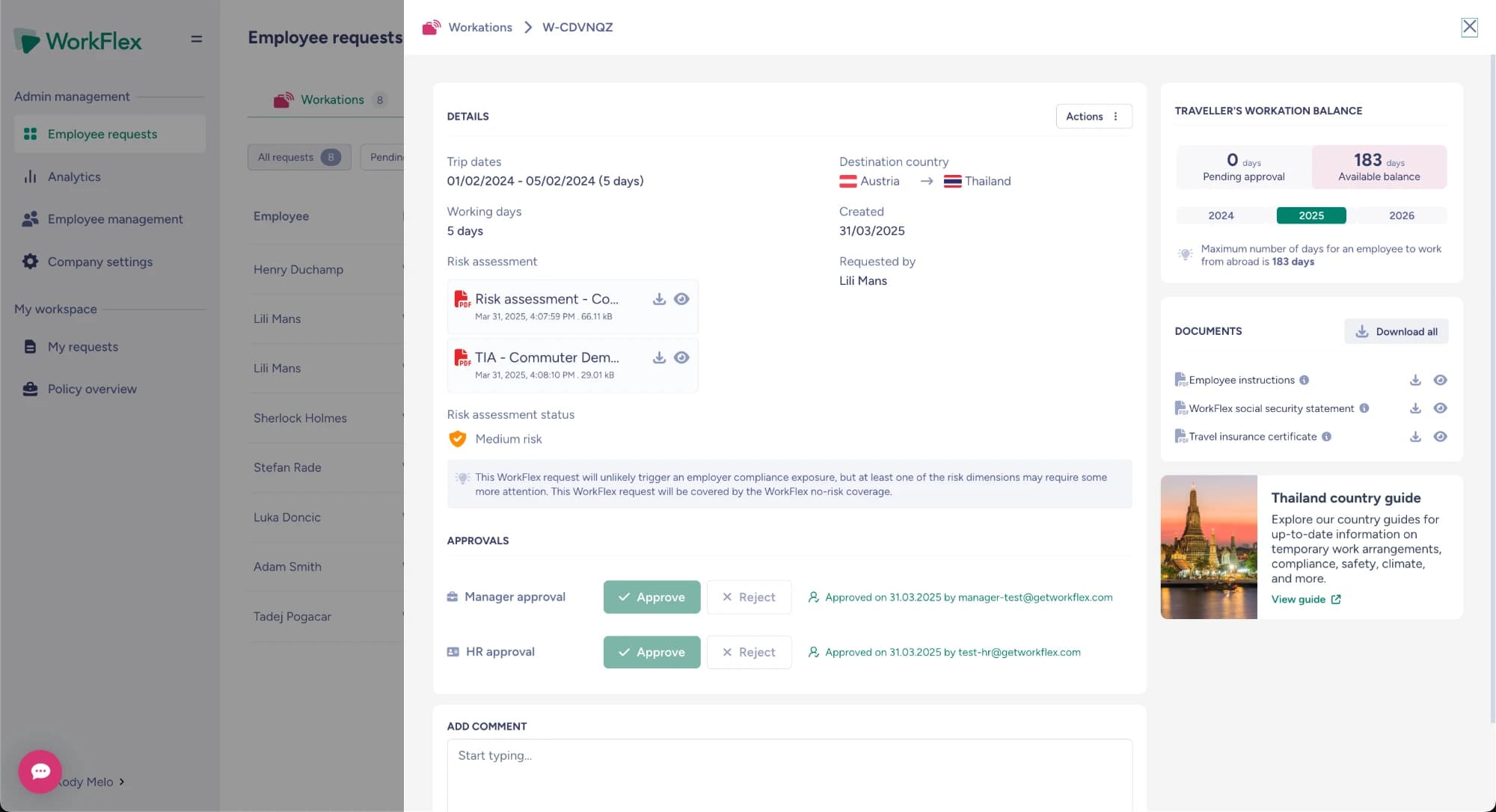
Current WorkFlex Workation request detail drawer
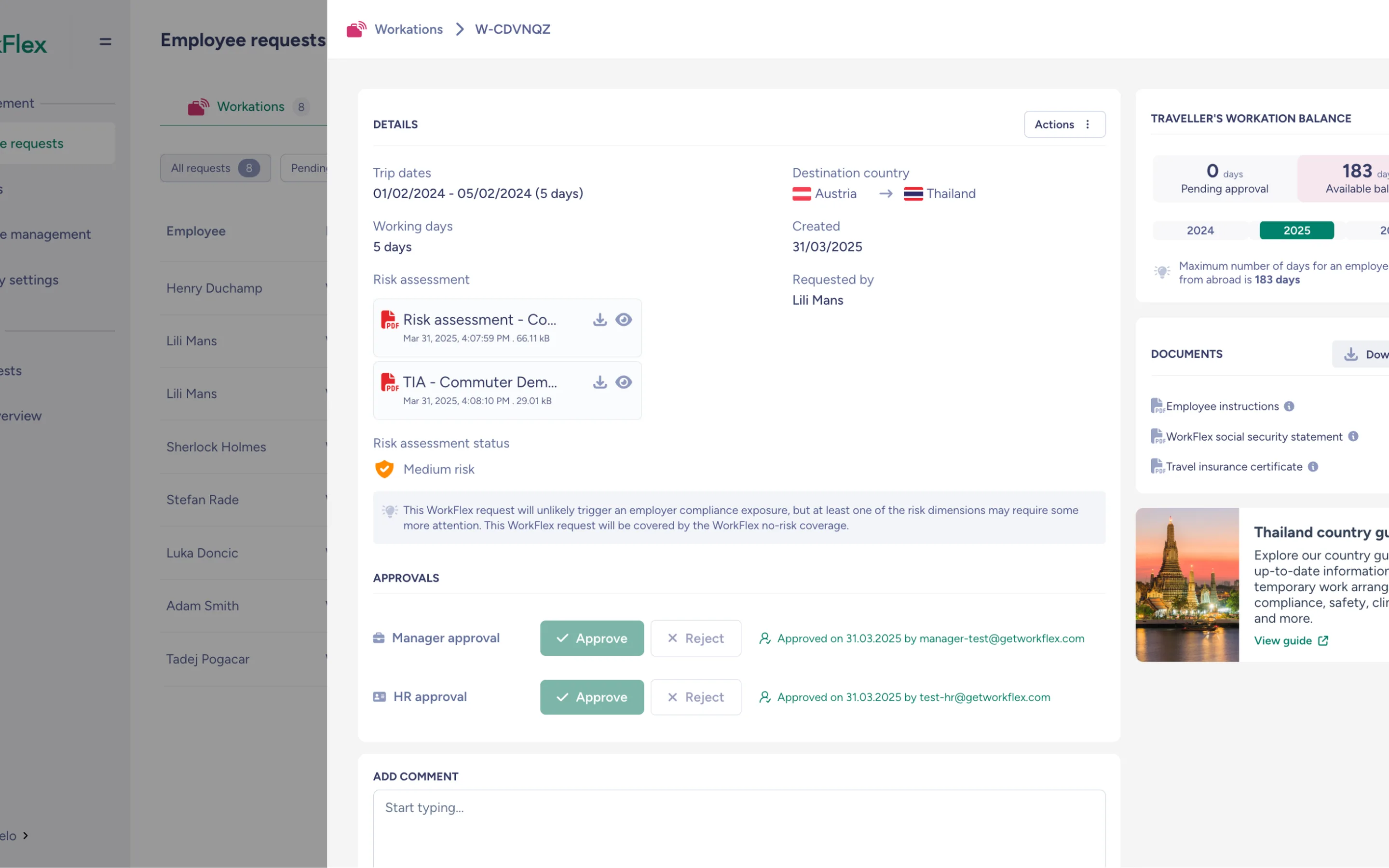
Current WorkFlex Actions menu on the request
WorkFlex's workflow. Step 04 is this screen.
Screen

Request detail, every decision state

Approver

Laura Müller, Global Mobility

Inputs

Brief, 2 screenshots, 12-minute demo

No real users
Deliverables
  • High-fidelity screen
  • Design rationale
  • Video (optional)
  • 3 to 4 days
Judged on

Equal weight on research and UI

  • User understanding
  • Clarity and accessibility
  • Prioritisation
  • UX writing
  • Pain points

Persona

Her job is to defend a decision, not to read a document.

Brief persona

Laura Müller

Role
Global Mobility & Compliance Manager
Age
38
Location
Frankfurt, Germany
Company
Enterprise, 1000+ employees, multinational

Works in

  • HRIS
  • Travel platform
  • Email
  • Excel
  • PDFs
"I don't need more information. I need the right information, and a record I can defend."

Primary responsibilities

  • Ensures employee travel complies with local labor laws, tax rules, and visa requirements
  • Coordinates with HR, legal, and travel teams to approve or reject business trips and workation requests based on risk assessment outcome
  • Maintains audit trails and documentation for posted worker and A1 regulations
  • Uses digital tools to assess compliance risks before travel occurs

Tech use

  • Uses enterprise HRIS and travel management platforms
  • Open to automation and AI if it reduces manual work and risk
  • Needs trust and transparency in tools to defend decisions to auditors or leadership

Motivations

  • Avoid fines and reputational risk from non-compliant employee travel
  • Create a smooth, scalable process for approving frequent travel requests
  • Gain visibility into where employees are working and for how long
  • Collaborate easily with other departments (HR, legal, payroll)

Challenges

  • Manual and fragmented processes (email, Excel, PDFs)
  • Limited real-time data on where employees are traveling
  • Complex country-specific compliance rules that change frequently
  • Pressure to ensure compliance without delaying business needs

Three questions behind every request

Each one comes from a line in her brief. Who, where and when sit under all three.

Question 1Do I need to act?
From her brief
"…approve or reject business trips and workation requests"
Question 2Can I approve this, and why?
From her brief
"…based on risk assessment outcome"
Question 3What happens if I approve?
From her brief
"…defend decisions to auditors or leadership"

Observations

Three critical decisions are unclear.

I evaluated the existing experience through a heuristic review and five simulated approvers.

Current WorkFlex drawer, annotated: Unclear meaning
Open in Figma

1 of 3

Unclear meaning

  1. Approve and Reject still show after both approvals. Can the decision still change?
  2. “Medium risk” carries a check mark, and the note says it is covered. Is any action needed?
  3. The country guide photo draws more attention than the request.

State is implicit

  • Approve still live after a decision
  • No status, no “whose turn”
  • Documents carry no state
  • Nothing says what happens next

Inputs shown, answers withheld

  • “Medium risk” with no reason
  • Balance never shows this trip
  • Dates and day counts disagree
  • Profile data exists, not shown

One word for two ideas

  • Risk beside “no-risk coverage”
  • Edit and reschedule overlap
  • Requester and traveller look alike

Actions leave no record

  • Reject asks for no reason
  • No activity trail
  • No undo, no confirmation

Assumptions

Written down first, then simulated.

  • State at a glanceShe can't tell what state the request is in.Flagged · 0 of 5 agents could
  • Her turnShe can't tell whether she needs to act.Flagged · 0 of 5 agents could
  • Why Medium riskShe can't see why it's risky without the PDF.Flagged · 0 of 5 agents could
  • Days leftShe can't tell whether the trip fits the year.Flagged · 0 of 5 agents could
  • Who approvedShe can't see who approved, and when.Lower concern · 4 of 5 agents found it

Four of five held. Approval history was already clear, so I kept it.

"If both lines say approved, why are the Approve buttons still lit up? One of them is lying."
Marco, payroll · simulated
"It tells me one dimension needs attention and then refuses to tell me which one."
Ahmed, HR ops · simulated
"It says five working days for Thursday to Monday. I count three."
Marco, payroll · simulated

syntheticFive LLM agents with screenshots only: a signal for where the screen fails, not real user research.

Problem statement

The current screen doesn't clearly show who needs to act, why a request is risky, or what happens after approval.

Prioritise

Three problems worth solving first.

  1. 1
    State and turnShe can't tell the request's state, or whether it is her turn
    Score 72 of 75
    Solve now
  2. 2
    Risk reasoningShe can't tell what is flagged, why it matters, or what to resolve
    Score 71 of 75
    Solve now
  3. 3
    Cost and factsShe can't see what approving commits to: days, dates, documents
    Score 65 of 75
    Solve now
  4. 4
    Defensible recordNo record keeps her decision and its reason in one place
    Score 58 of 75
    Carried inside
  5. 5
    Safe actionsShe can't change or cancel a request without fearing side effects
    Score 57 of 75
    Carried inside
  6. 6
    ThroughputShe can't clear a queue of requests in one sitting
    Score 40 of 75
    Deferred

I prioritised decision clarity first, built safe actions and a defensible record into it, and deferred queue throughput.

The top three answer whether to act, why a request is risky, and what approval commits to. Safe actions and a decision record share the same state and event model. Queue throughput falls outside the brief’s scope.

Step 1 · Quick fixes

Today's drawer, fixed in place.

Target30 of 35 tasks on the same seven, none failed
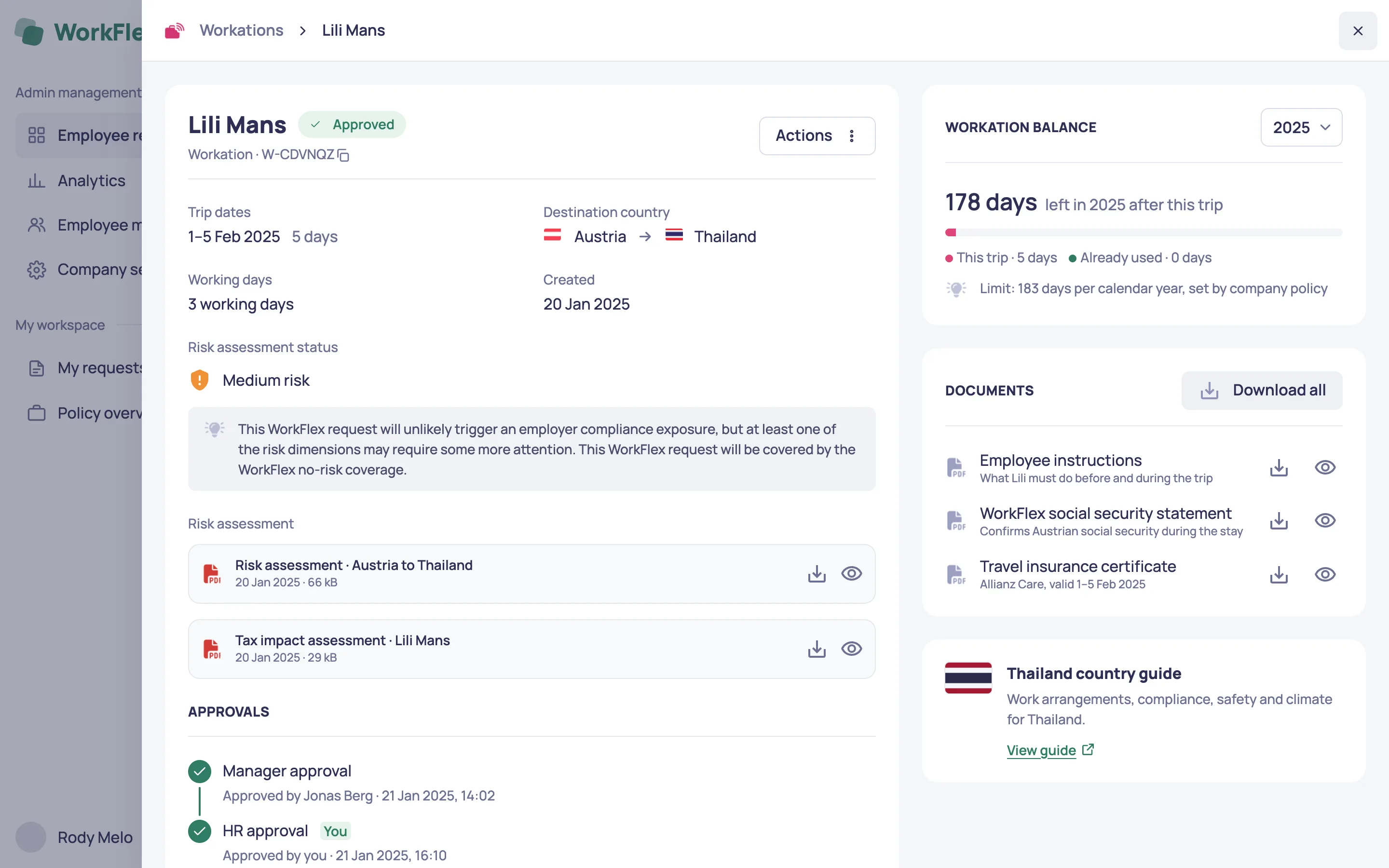
OriginalBrief
Step 1Quick fixes
The drawer with the Step 1 fixes
Current WorkFlex drawer

Step 2 · Foundation

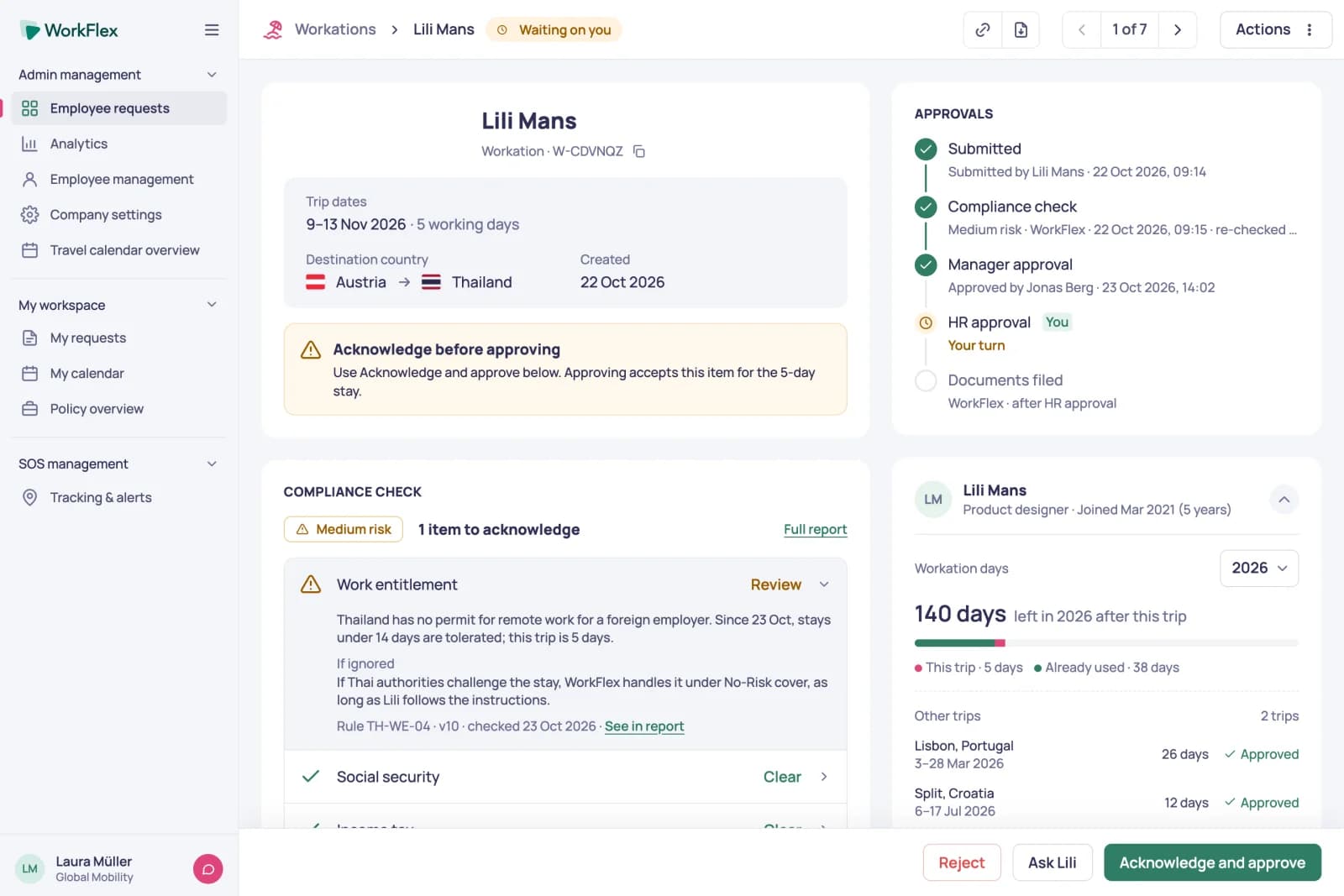
One page. Three decision questions.

DefineKeep the drawer, split the screen, or move to a page
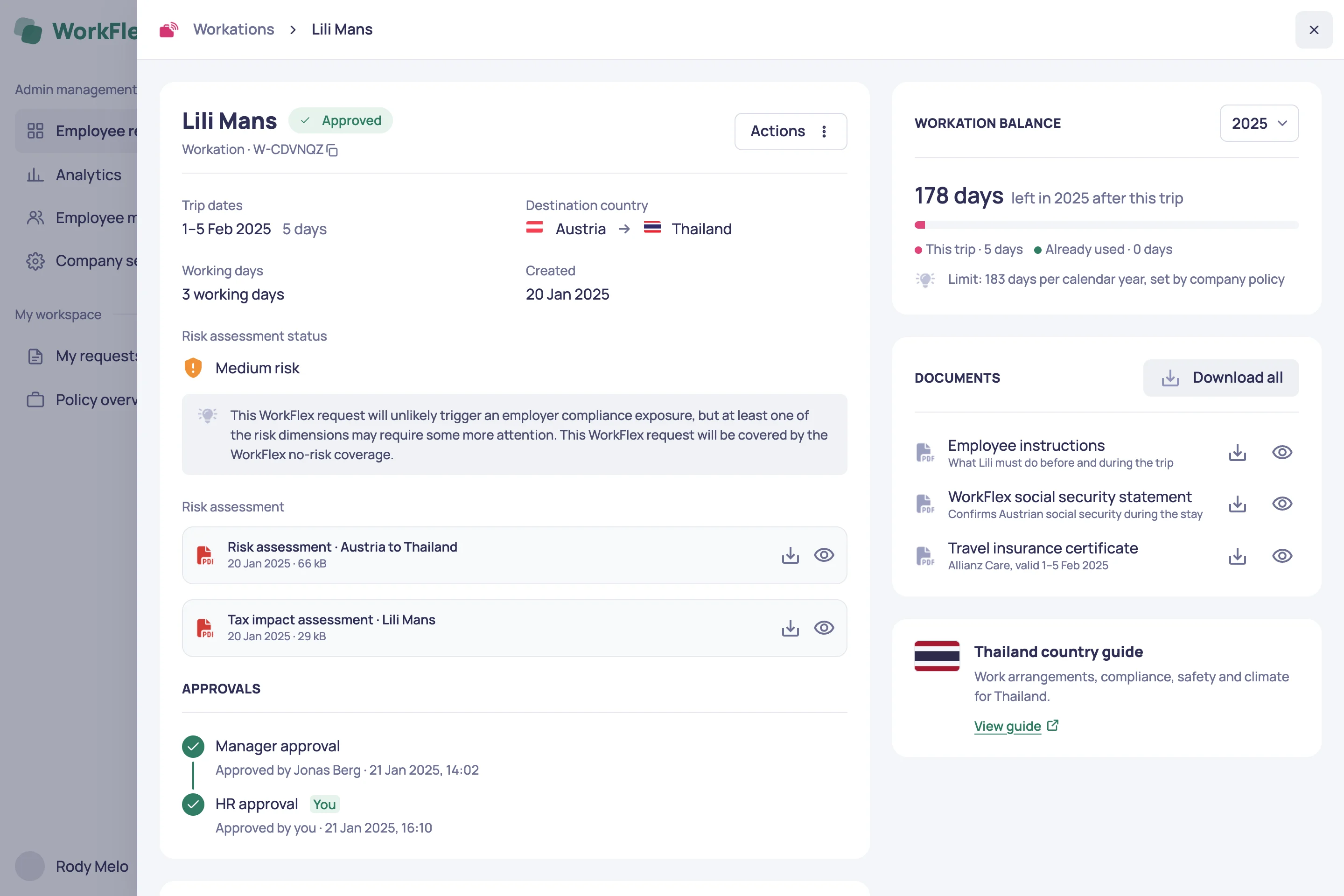
Step 1 drawer
Step 1 keeps the drawer
Step 2 page
Step 2 becomes a page (chosen)

The drawer covered 1,293 of 1,440 px, so the list behind it was unusable anyway.

StructureWhere the request lives, and what the page answers first

  1. Employee requests
  2. Workations list
  3. Lili's requestits own URL

Breadcrumb back to the list‹ 1 of 7 ›, or the arrow keys

HeaderName, status pill, pager, Actions
Request summaryWho, where, when, and the notice
Compliance checkRisk, six dimension rows, coverage
ActivityComments and timeline, the record
ApprovalsWho has decided, whose turn
Employee cardDays left after this trip
DocumentsWhat is ready, what is pending
Country guideSecondary
Decision barReject · Ask · Approve, only on her turn

The card order is the same in every state. Only the content changes, and whether the decision bar appears.
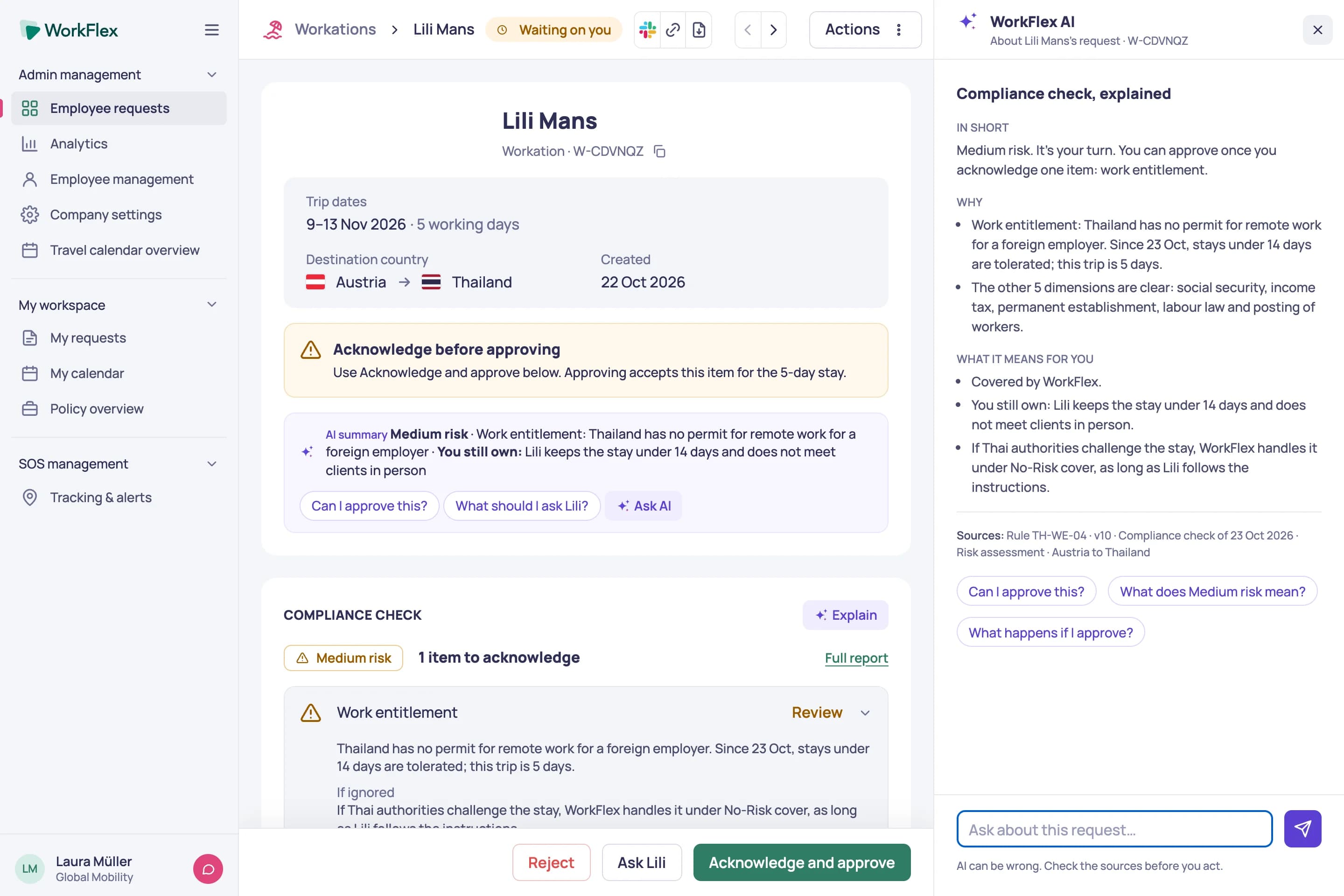
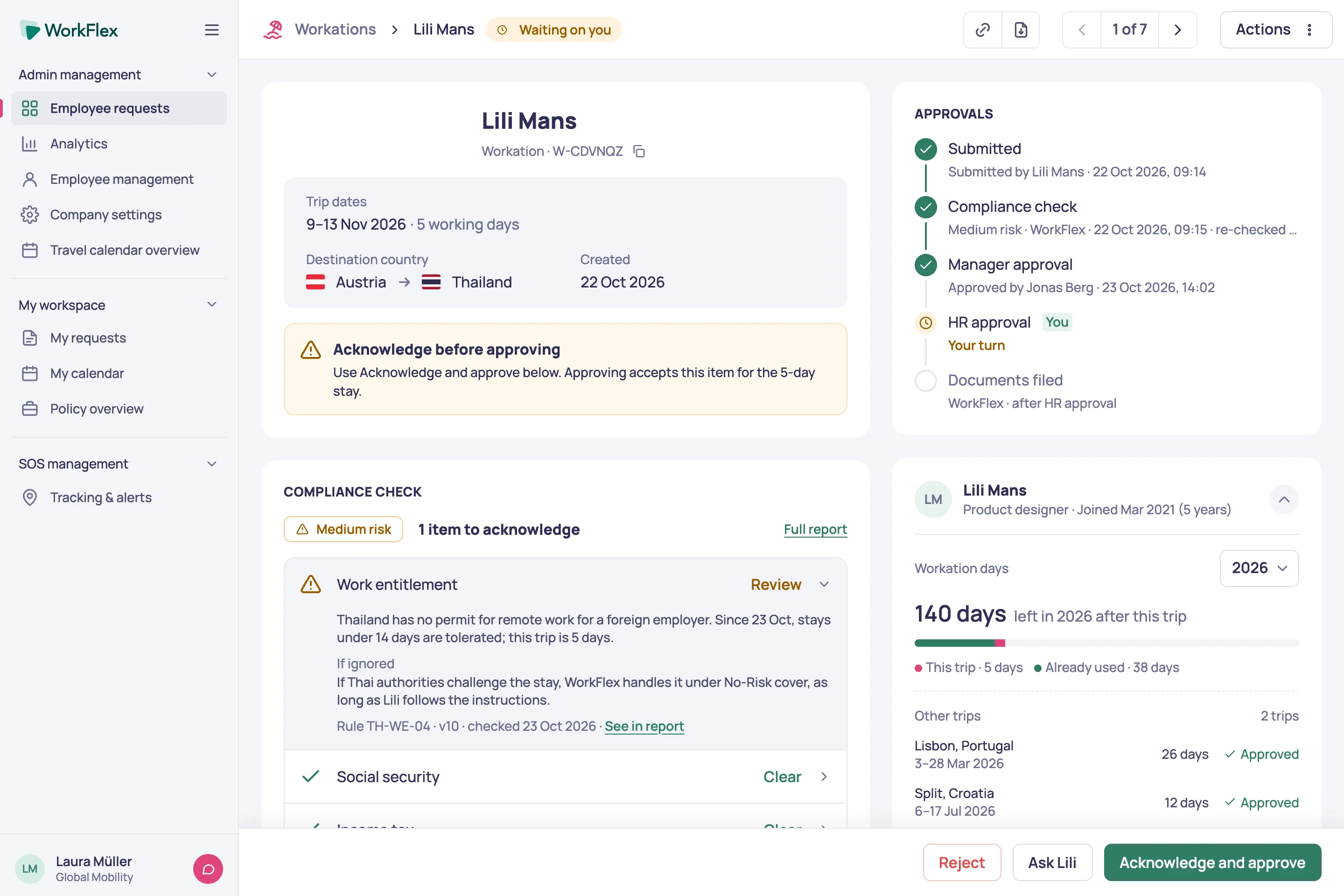
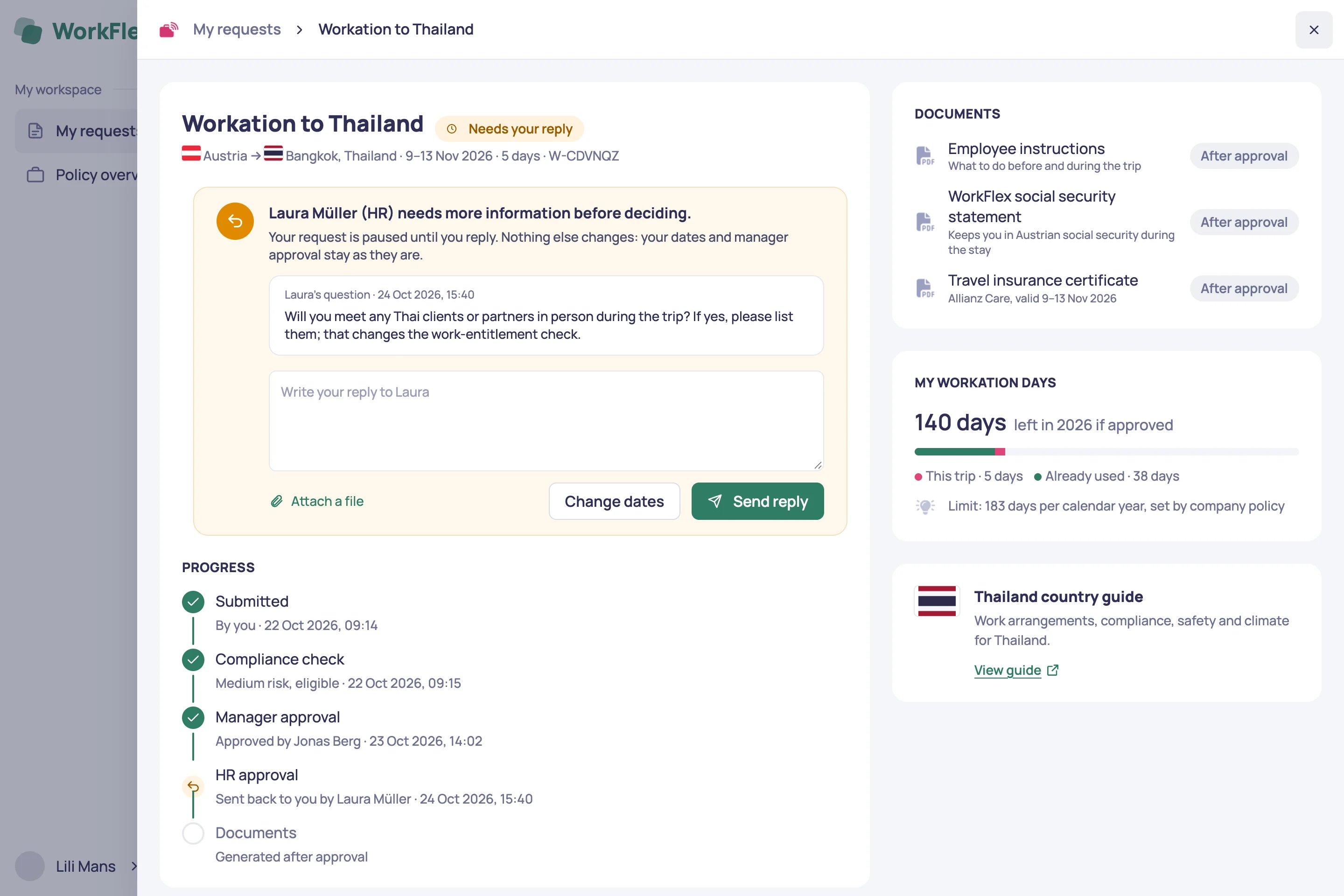
Step 2 request page for Lili Mans, waiting on HR

Chapter 1 of 5: Whose turn it is, at a glance

Chapter 1 / 5

Whose turn it is, at a glance

Tap a note to frame it on the screen above.

  • 01

    Status next to the name

    "Waiting on you" stays in the header at every scroll position.

  • 02

    Whose turn, in the chain

    The manager approved, with name and time. HR approval is marked You, Your turn.

1 / 5

Chapter 1 of 5: Whose turn it is, at a glance

Country rules, rule ids, thresholds and fines in the prototype are sample data, not legal advice.

Step 2 · Words

The same request, rewritten.

Risk

BeforeThis WorkFlex request will unlikely trigger an employer compliance exposure, but at least one of the risk dimensions may require some more attention.

AfterMedium risk, 1 item to acknowledge. Thailand has no permit for remote work for a foreign employer. Since 23 Oct, stays under 14 days are tolerated; this trip is 5 days.

Balance

Before0 days Pending approval · 183 days Available balance

After140 days left in 2026 after this trip

Approval

BeforeApproved on 31.03.2025 by manager-test@getworkflex.com

AfterApproved by Jonas Berg · 23 Oct 2026, 14:02

Step 3 · AI-powered solution
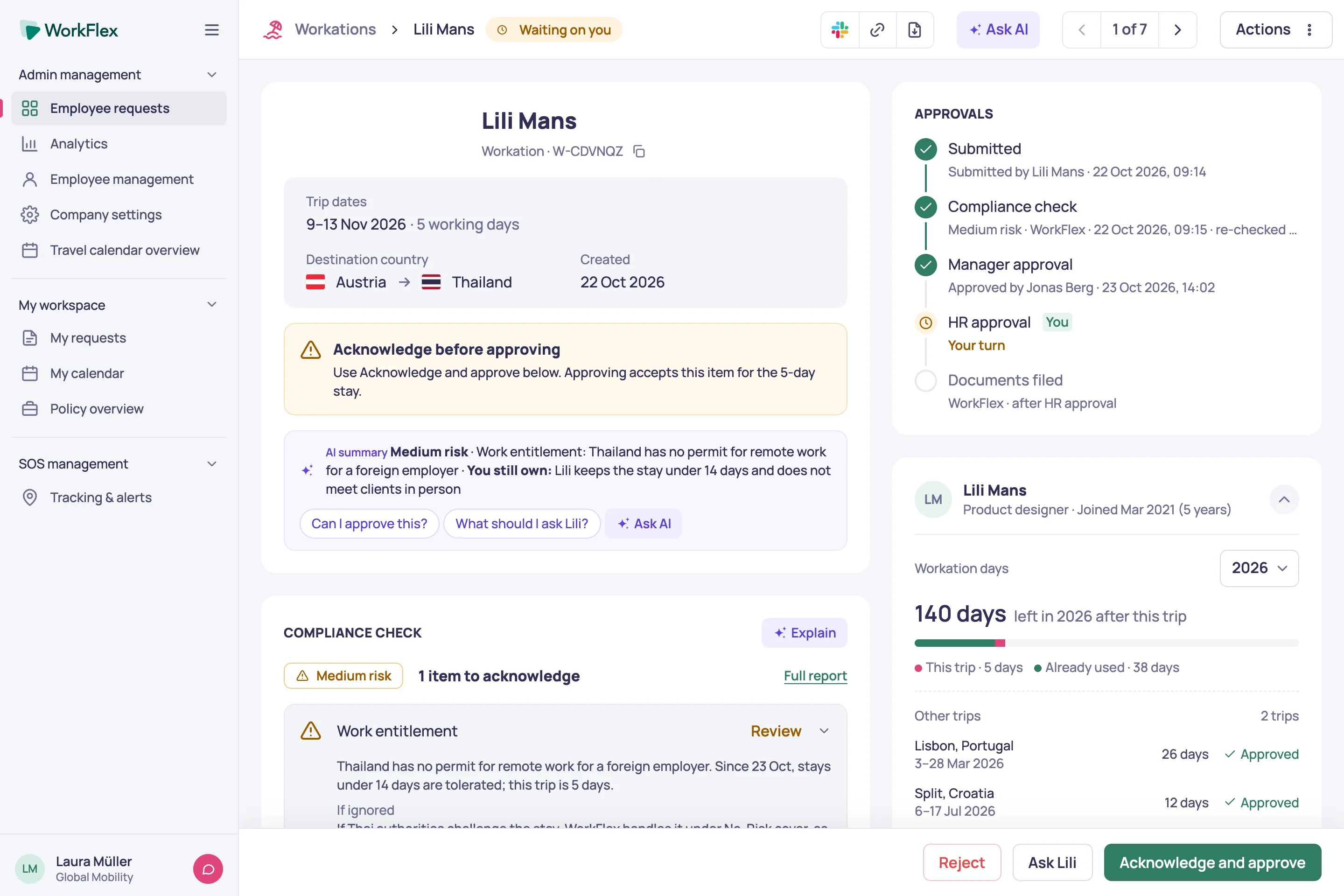
AI explains and drafts. Humans decide.

Step 2Foundation
Step 3AI solution
Step 3 request page with AI
Step 2 request page
Compliance check explained

Explain risk

Puts the compliance check in words: in short, why, what it means for you, and the rule it rests on.
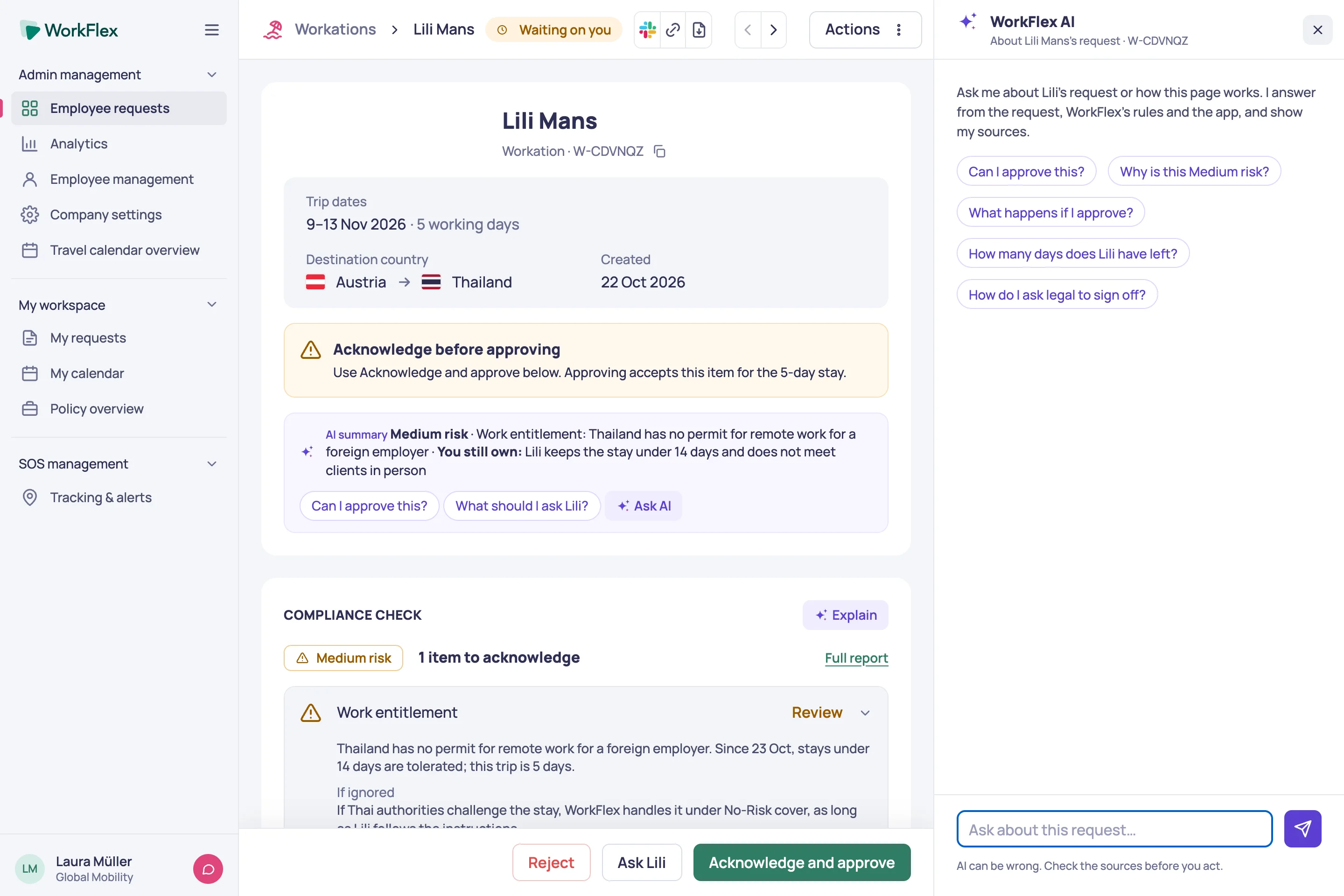
Ask AI side panel

Ask AI

Answers questions about this request. Used to understand jargon or a process, never to decide.
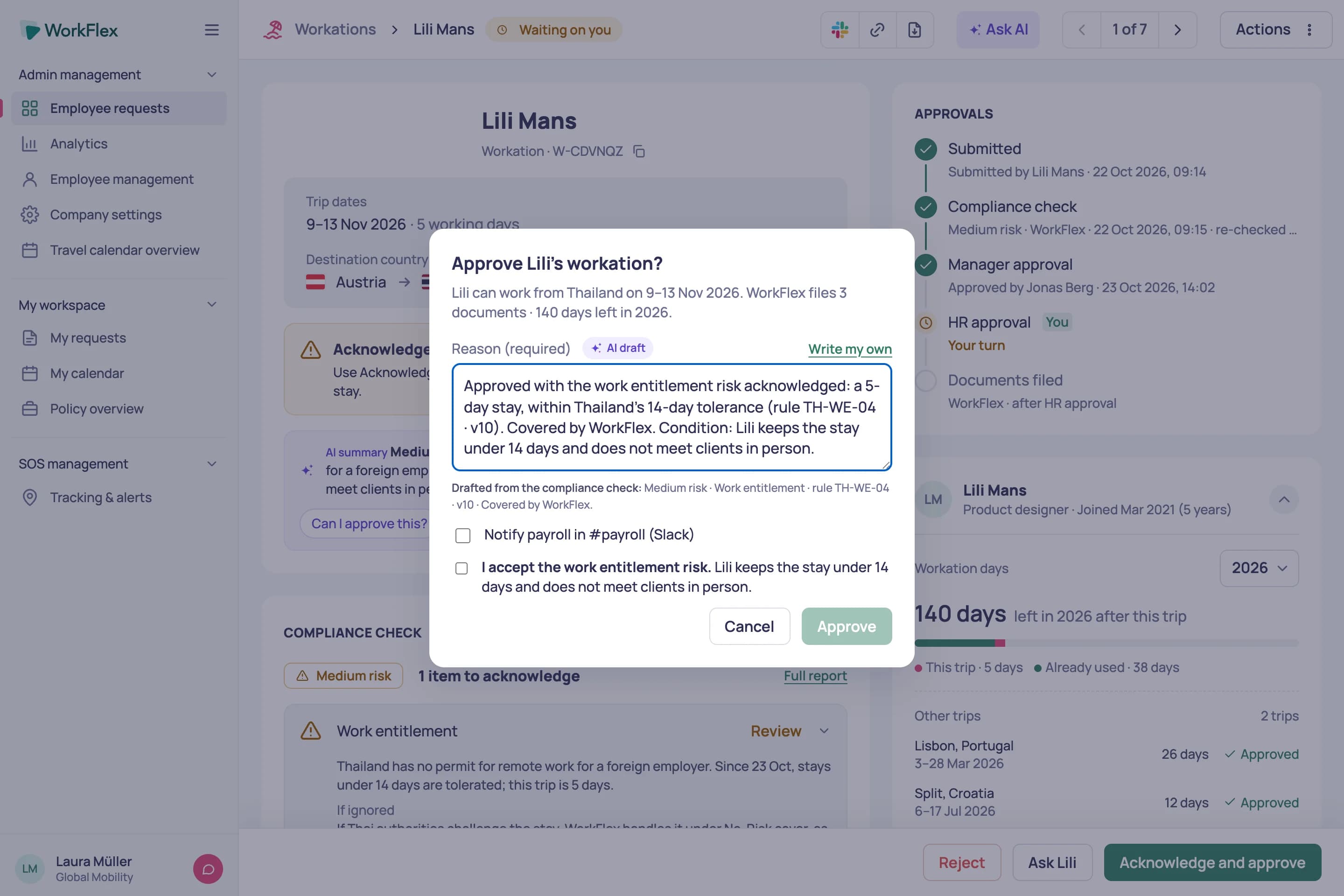
Approve dialog with an AI-drafted note

Draft response

Writes the approve, reject or ask message from the verdict. Laura edits and confirms it; the draft is logged.

  • Compliance checks come from WorkFlex's rules and data, not the AI
  • Answers only from this request, WorkFlex's rules and the app
  • Names its sources
  • Never approves or changes data

Explored and set aside

The request as a chat

Ranked last by 4 of 5: the facts moved behind Details. Kept as a triage idea.
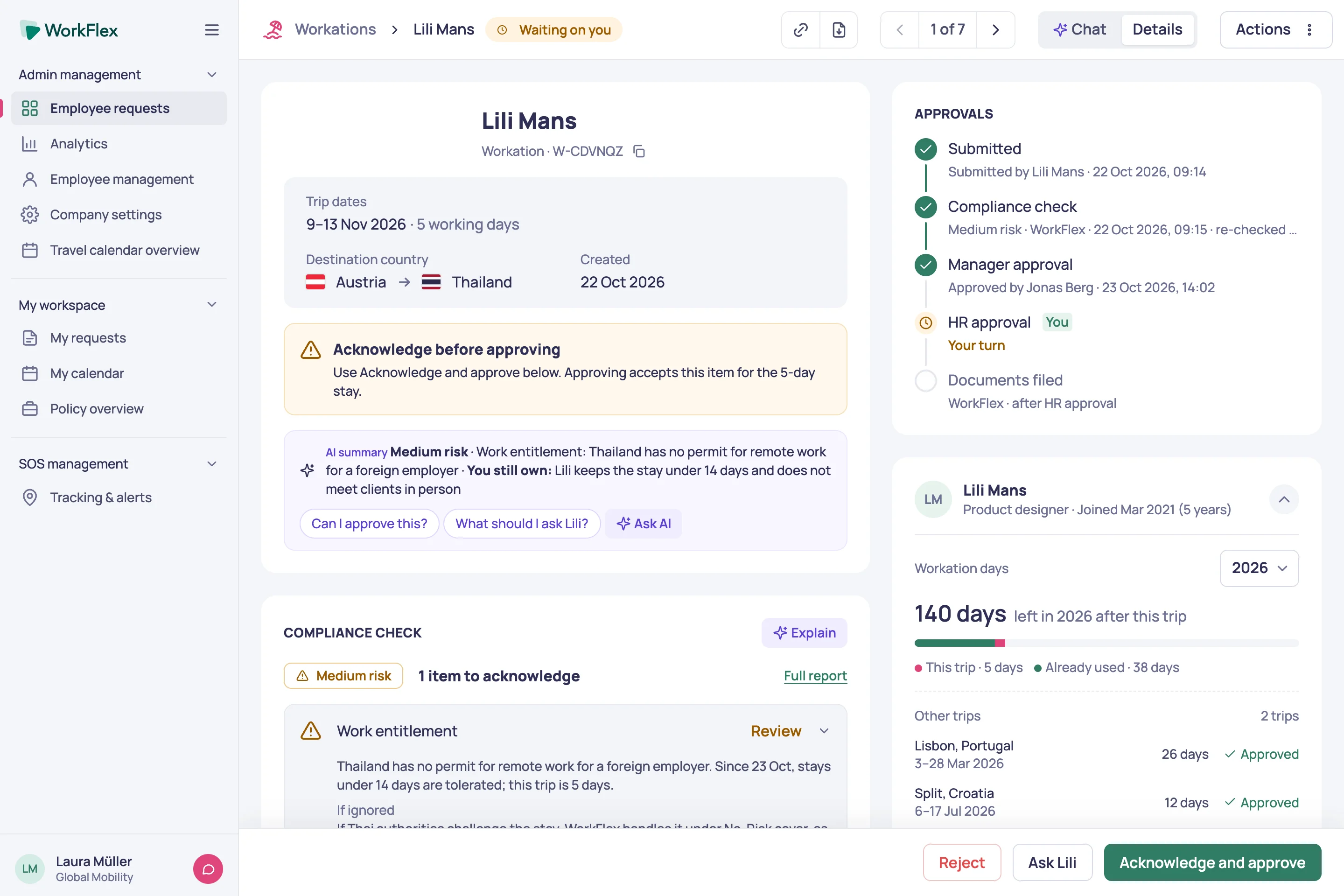
Chat-first request view

Results

synthetic

Task success in LLM simulations.

Original7 of 35tasks fully successful
Quick fixes30 of 35tasks fully successful
Foundation35 of 35tasks fully successful
AI solution35 of 35tasks fully successful
MeasureOriginalQuick fixesFoundationAI solution
Mean ease, out of 73.55.45.75.7
Ready to act0 of 50 of 54 of 5Not run
Record audit-ready0 of 5Partly3 of 5Not run

What the AI added, tested separately

  • Drafted note accurate for Lili 5 of 5, edited by 4
  • Preferred the AI on top of the page 4 of 5
  • Draft wrong for Sherlock, now redrafted

Task success and ease matched the foundation; the AI did not make the tasks easier in simulation. Its value here is explanation and drafting, which still needs real users to confirm.

Why Medium risk? 0 of 5 could say after quick fixes; the foundation answers it.

Five LLM agents, same seven tasks. The scenarios differ between stages, and the AI solution was tested in its own round, so this is directional, not a controlled before-and-after.

Task by task
  • 5-second testOriginal:Quick fixes:
  • Anything to do?Original:Quick fixes:
  • Why Medium risk?Original:Quick fixes:
  • Days left, fits?Original:Quick fixes:
  • Who approved, when?Original:Quick fixes:
  • Change the datesOriginal:Quick fixes:
  • Open the risk reportOriginal:Quick fixes:

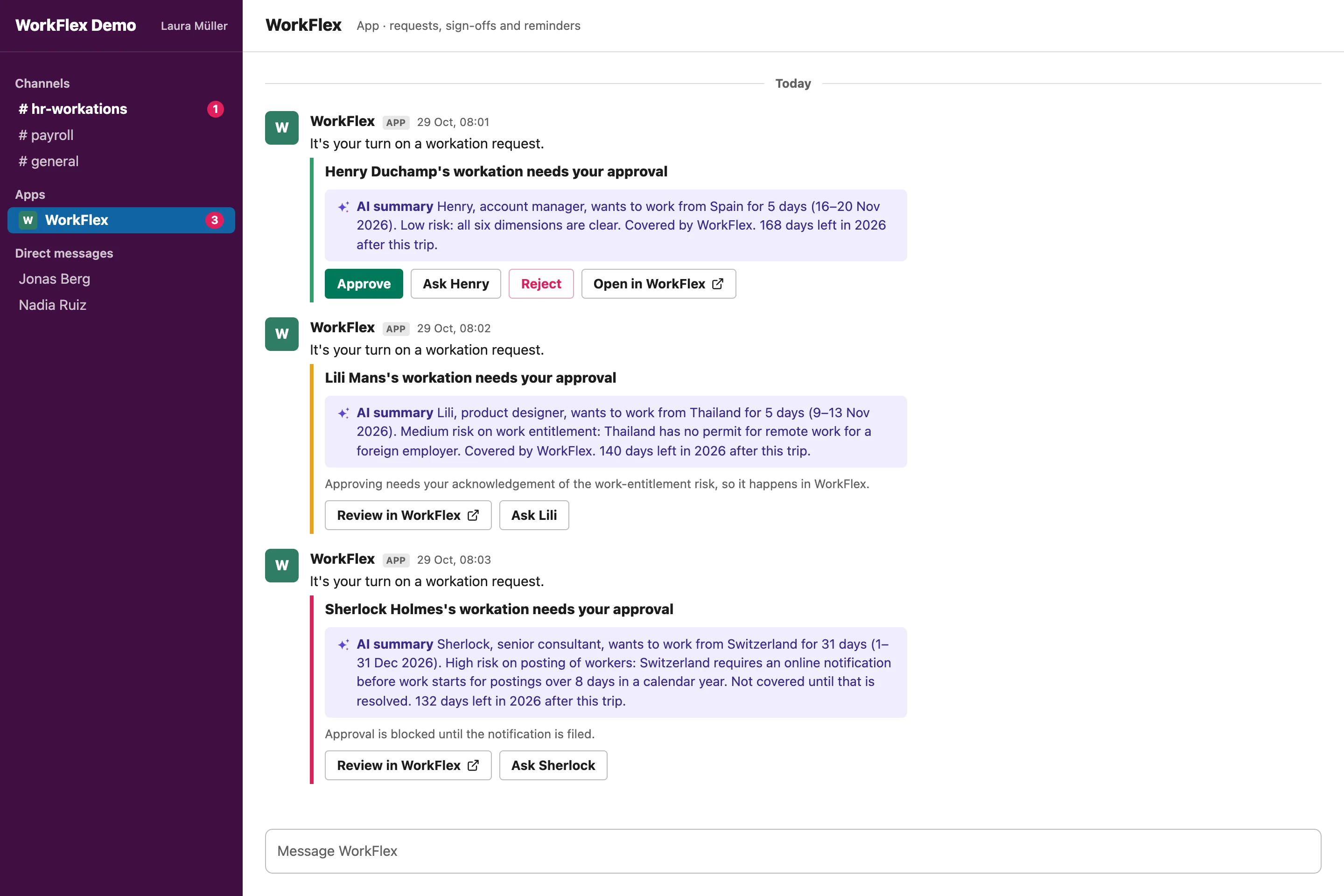
Future · Integrations

The decision reaches people where they are.

Choices

What I cut, and what I kept to.

Cut
  • Bulk approve
  • Shortcuts
  • Workspace and split layouts
  • Teams and delegation
  • Video
  • AA contrast on text
  • No state by colour alone
  • Keyboard for every action
  • Graphics at 3:1open

Proposed metrics

Measuring success

What I would track after launch with real HR users.

Faster decisions

Average time to review and decide on a request.

Faster decisions with AI.

Less PDF dependency

Share of requests reviewed without opening the compliance report.

More decisions completed within WorkFlex.

Accurate AI

Share of AI explanations supported by verified compliance information.

100% grounded in approved sources.

Clear decision records

Share of decisions requiring a reason that have a clear, recorded reason.

100% of required decisions documented.

Compare the same approval scenarios with and without AI. Measure decision speed, correctness and user confidence to assess the value AI adds.

These are proposed production metrics, separate from the simulated test results above.

What's next?

I'm looking for a hands-on Lead or Staff product design role at a B2B infrastructure or AI company, where design owns product decisions, not just screens. If that's the role you're hiring for, I'd love to talk.
More workBack to all work